





Waterproofing becomes a scheduling problem when UGG boots are needed for a Burbank event, fitting, travel day, shoot or long workday. A rushed spray can leave the pair damp, uneven or noticeably darker when it needs to be worn or photographed. The correct workflow begins by determining whether the model is actually waterproof, merely treated for light moisture or not intended for wet conditions at all.
Build time for inspection, approved application, 24-hour natural drying, brushing when permitted, final review and a backup plan. Surface protector may improve repellency on compatible material, but it cannot add seam sealing or a waterproof membrane to an ordinary Classic boot.
A Deadline Safe Readiness Plan
| Stage | Required check | Do not proceed when |
|---|---|---|
| Identify | Model, color, materials and official water claim are documented | The boot is being identified only by appearance |
| Inspect | Both boots are clean, dry and compared in neutral light | A stain, water ring, odor or unknown treatment remains |
| Treat | Protector is approved and applied evenly as directed | The product excludes a finish or the area lacks ventilation |
| Dry | Full directed natural drying time is available | Heat or same-hour wear would be required |
| Approve | Pair is checked, photographed and accepted with backup available | Color, nap, odor or feel is still changing |
Confirm the Water Claim Before the Schedule
- A product described as waterproof is built with features intended to resist water entry, such as a membrane, seam sealing, a gusseted tongue or waterproof materials. The exact construction and limits belong to the individual model.
- A water-repellent treatment helps water bead or slows absorption at the surface. It does not seal every seam, opening or construction point, and it wears down with use.
- A post-applied factory treatment may give a new pair initial resistance to light water. That wording is not the same as a waterproof rating, and the current product page should be checked before wear.
UGG’s official care and cleaning guide states that not all Classic boots are water-resistant or waterproof. It directs owners to the exact model’s features and explains that protector adds surface protection without making every Classic fully waterproof. Production and event notes should preserve that distinction instead of using the word waterproof as a blanket status.
A purpose-built model illustrates the difference. UGG’s Classic Mini GTX page lists waterproof suede and an internal GORE-TEX membrane. Those built-in features cannot be duplicated by a surface spray on a standard suede pair.
Document the Pair for Wardrobe Continuity
- Photograph both boots from the front, sides, back and top under neutral light.
- Record model, color, size, material, product used and every existing mark.
- Keep duplicate pairs labeled separately and never assume they will accept treatment identically.
- Treat left and right boots together under the same conditions unless a specialist directs otherwise.
- After full drying, photograph the final appearance and attach it to the wardrobe or event notes.
Suede nap reflects light differently depending on its direction. A harmless-looking spot in soft room light may become obvious under side light, flash or a high-resolution camera. Final approval should happen under conditions similar to the intended use. If the pair is part of scene continuity, do not add a new treatment between matching scenes without review.
Apply Protector Without Creating a New Problem
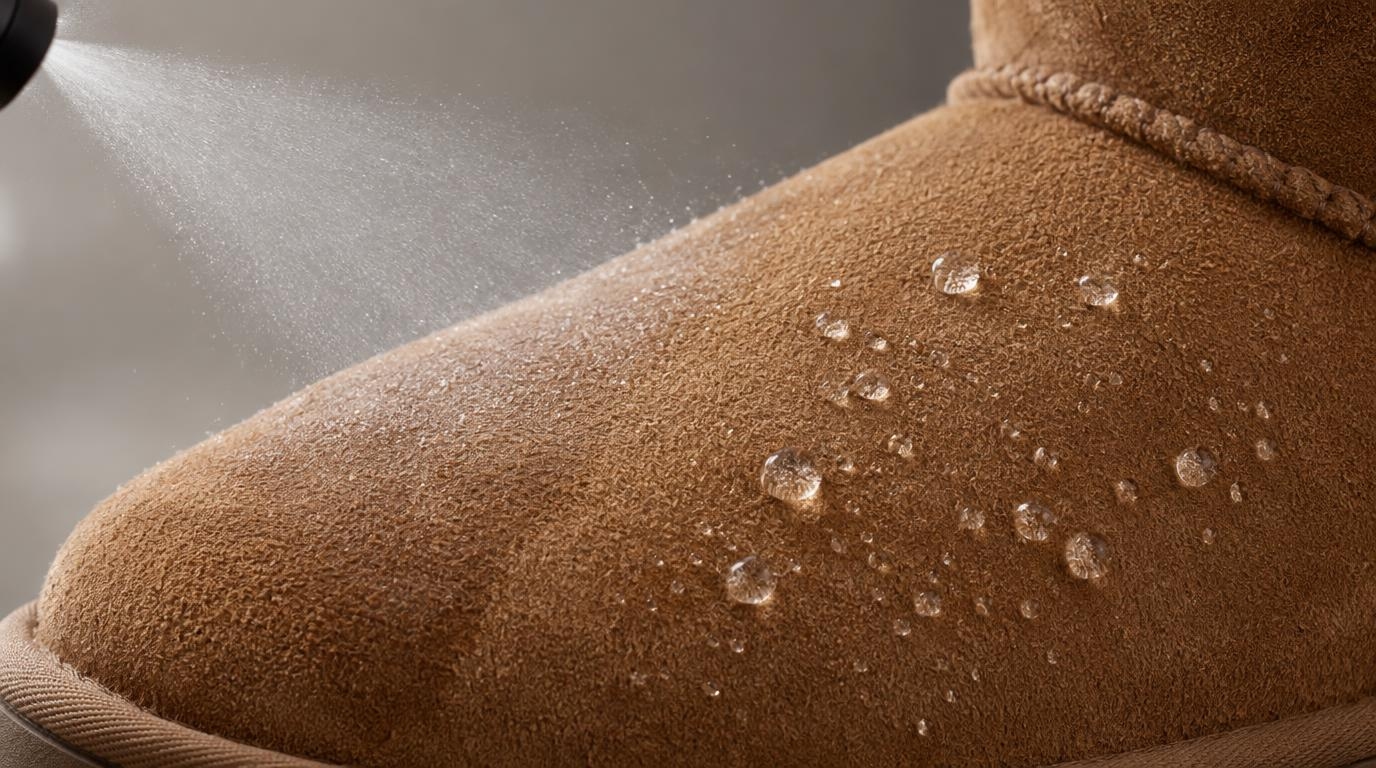
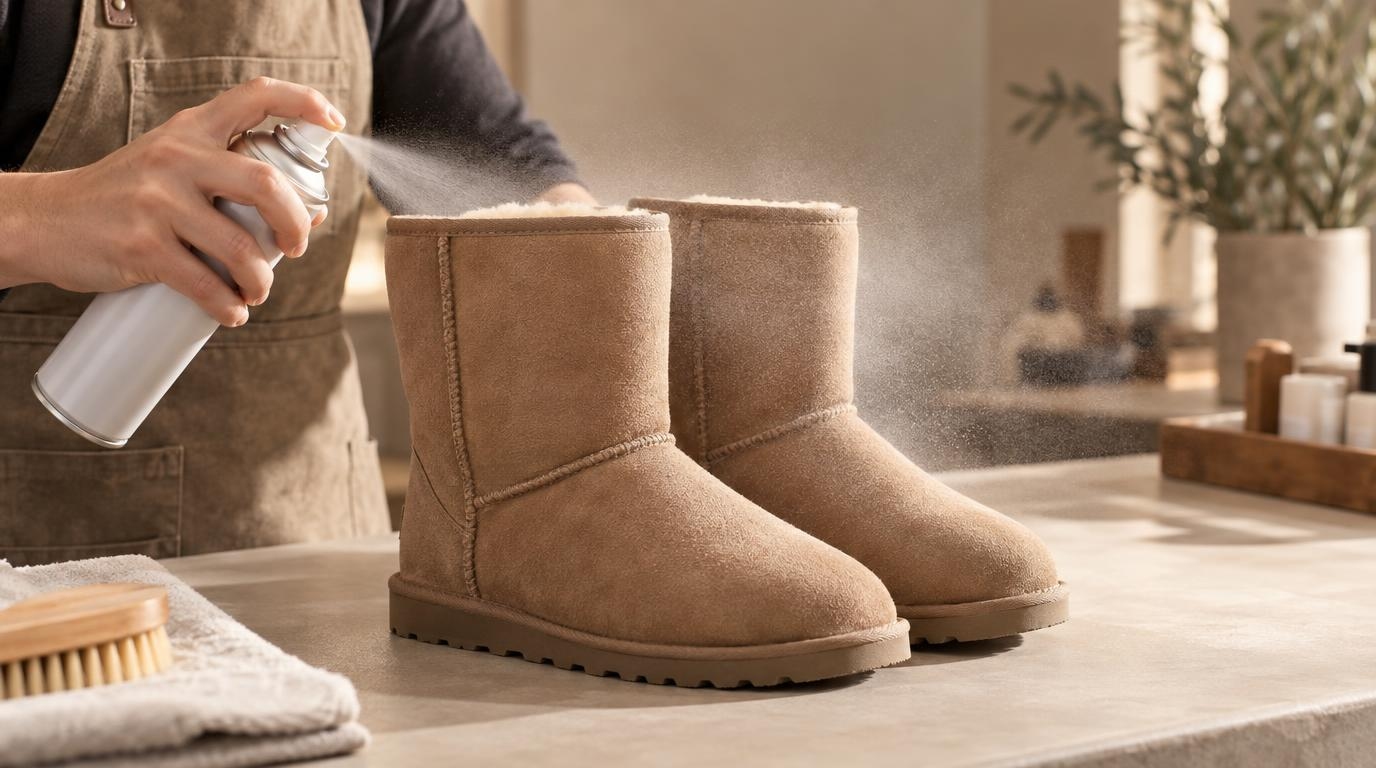
For eligible suede and sheepskin, UGG’s official directions call for a clean, dry pair, a well-ventilated area, a shaken bottle and an even spray from about six inches away. The surface should be wet but not soaked. Natural drying takes 24 hours in a cool, ventilated place away from direct heat and sunlight. Once fully dry, approved suede may be brushed gently in one direction.
- Schedule application early enough that a failed compatibility check does not threaten the booking.
- Protect the set, wardrobe room or work surface from overspray and follow all product safety directions.
- Do not apply over makeup, oil, dust, adhesive residue or an unidentified mark.
- Do not accelerate drying with a dryer, fan heater, hair dryer, radiator or direct sunlight.
- Do not pack, bag, stack or wear the boots while they remain damp or strongly scented with product.
Plan for Rain Without Relying on Spray
Weather protection is a system: the right boot, the right route, the right timing and backup footwear. Even a waterproof model has an open top and stated use conditions. A surface-treated Classic may be reasonable for brief incidental moisture, but it is not the dependable choice for sustained rain, pooled water or repeated outdoor takes on wet ground.
| Situation | Lower risk plan | Backup action |
|---|---|---|
| Outdoor arrival in uncertain weather | Wear weather-appropriate footwear during transit | Change into approved boots indoors |
| Repeated exterior takes | Use a model officially designed for the conditions | Keep matched backup pairs dry and labeled |
| Event photography | Inspect and photograph after full treatment drying | Carry alternate footwear and touch-up tools approved for the material |
| Travel or wardrobe transport | Pack only when fully dry and supported | Use breathable separation and avoid crushing the shafts |
If Water Exposure Happens
Move the boots out of the wet environment, blot gently without rubbing and support their shape with clean, colorfast absorbent material. Let them dry naturally away from heat and sunlight. Do not add another product while the upper is wet. Record the incident and compare both boots after full drying before they return to wardrobe use.
UGG’s wear and care guidance warns that water can damage sheepskin and leather and advises against machine washing. Do not use a washer, dryer or conventional dry-cleaning process as an emergency reset. An assessment should account for construction, previous treatments and the required deadline.
Professional Assessment and Approval
Assessment is appropriate when the pair has water rings, oil, makeup, color transfer, stiffness, odor, unknown spray history or continuity importance. Bring both boots, duplicate pairs and the exact deadline. Ask for the proposed method, expected drying time, visible limitations and approval point. Cleaning or compatible protective treatment may improve a pair, but no honest process can guarantee perfect stain removal or make non-waterproof construction fully waterproof.
Alameda Dry Cleaners describes inspection, material-specific footwear care and repair options on its shoe and bag cleaning and repair page. For event or production use, bring the complete pair early and explain whether matching, photography or scene continuity is required.
Questions About UGG Protection and Deadlines
Can I spray UGG boots the night before a shoot?
Do not rely on that schedule. Official directions call for 24 hours of natural drying, and additional time is needed for compatibility, inspection and approval. Treat early and keep an accepted backup pair available.
Should duplicate UGG boots be treated together?
Document every pair first. Because age, wear, dye and prior exposure may differ, duplicate pairs may not react identically. Treat only as approved, keep each pair labeled and compare the fully dried results under the intended lighting.
Does waterproof UGG footwear need a backup plan?
Yes when timing, continuity or safety matters. Waterproof features have stated conditions and cannot prevent water from entering through the top. A backup protects the schedule when weather, fit, damage or appearance changes.
Use the Alameda Dry Cleaners contact page to confirm current shop information and discuss deadline-sensitive assessment.
Call Alameda Dry Cleaners at (818) 557-0276 before bringing in UGG boots tied to an event, wardrobe fitting, shoot or production deadline.