

When a hat is part of an event outfit, wardrobe pull, performance look or work uniform, identifying it correctly saves time. The name helps staff discuss the silhouette, but the crown, brim, visor, material and internal support reveal how the hat should be handled. A generic request to clean a black hat does not provide enough information.
This first article in the Hat Care Series gives Burbank readers a fast identification system for common headwear. Use it before styling, transport, cleaning or reblocking so everyone is talking about the same structure.
Use a Four Part Identification Check
- Describe the crown as soft or stiff, low or tall, rounded or creased.
- Identify a full brim, partial brim, front visor or no brim.
- Record the visible material and every secondary material in the band, trim, lining and sweatband.
- Check for hidden support such as wire, buckram, foam, cardboard, plastic, adhesive or a blocked felt body.
Photograph the front, sides, back, top and underside. A clear reference image protects continuity when a hat must be cleaned, repaired, reshaped and returned to a specific profile.
Hat Types by Structure
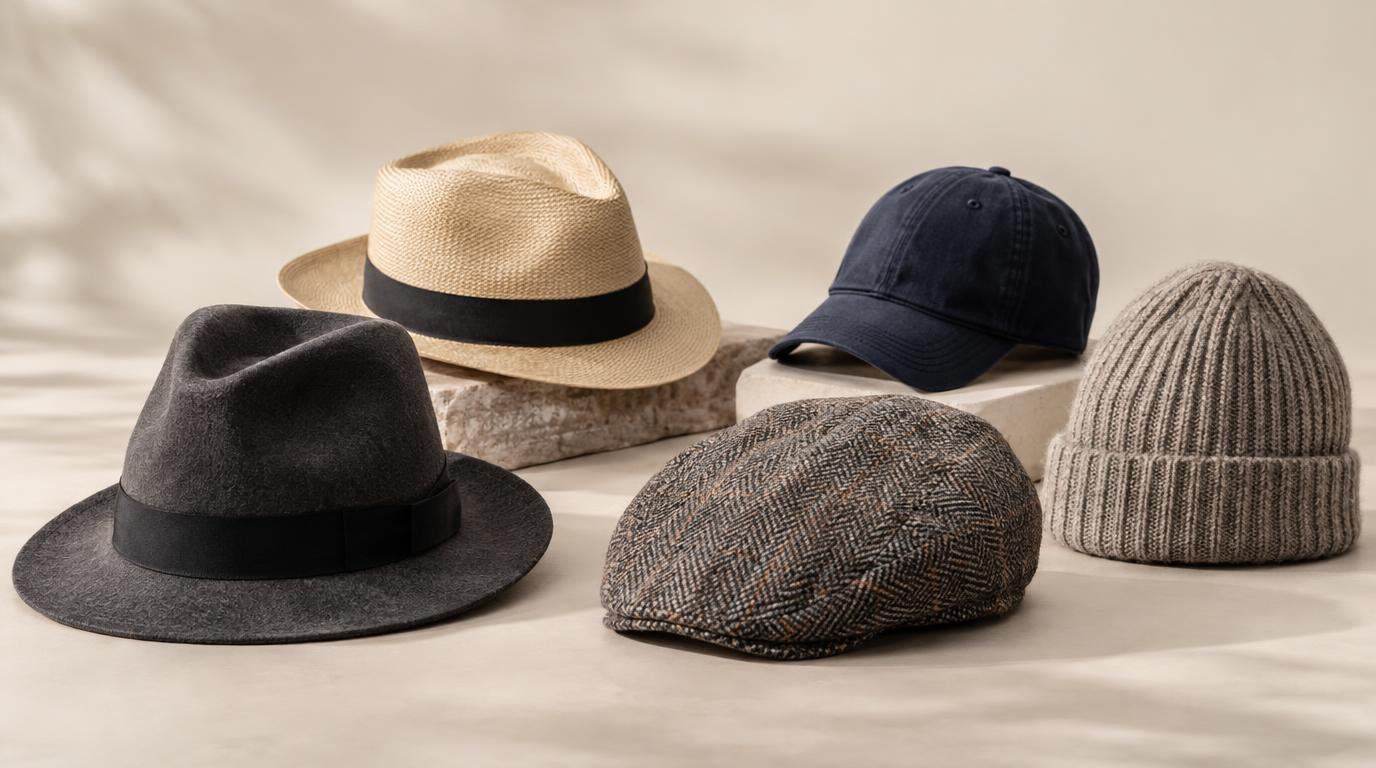
| Structure | Common types | Key identifying details |
|---|---|---|
| Paneled cap with visor | Baseball, dad, snapback and trucker caps | Crown firmness, visor shape, closure, mesh panels, embroidery and front-panel support |
| Creased crown with brim | Fedora and trilby | Fedora usually has a wider flexible brim; trilby usually has a narrow set brim |
| Tall crown with wide brim | Western, cowboy, outback and ranch styles | Crown crease, side curl, brim width, stiffness and weather-oriented trim |
| Flat or rounded cap with peak | Flat cap, ivy cap and newsboy | Newsboy has a fuller paneled body; flat caps sit closer to the head |
| Round crown without visor | Beanie, beret, cloche, bowler and pillbox | Soft knit, molded felt or stiffened form separates styles that share no front visor |
| Soft brim all around | Bucket, boonie and packable sun hats | Brim slope, width, vents, chin cord and whether the maker approves packing |
| Decorative headpiece | Fascinator and cocktail headpiece | Comb, clip, headband or elastic supporting feathers, veiling, flowers or sculpted trim |
Fedora Trilby Pork Pie and Homburg
These dress hats are often confused because they can share felt or straw materials. A fedora has a lengthwise crease or teardrop crown with front pinches and a medium flexible brim. A trilby uses a similar crown with a narrower brim, commonly down in front and up in back. A pork pie has a flatter top with a circular telescope crease. A homburg has a center crease and a firm brim with an upturned edge.
The Detroit Historical Society’s classic hat guide uses historical examples to distinguish the fedora’s wider softer brim from the trilby’s narrower semi-stiff brim. Those structural details are more dependable than color or brand when you need a quick identification.
Panama Boater and Other Straw Hats
Panama and boater describe different things. A Panama is traditionally woven in Ecuador from toquilla straw and can be blocked into several silhouettes. A boater is identified by a flat crown and flat rigid brim, often with a ribbon band. Other summer hats may use raffia, palm, sisal, paper braid or synthetic fibers.
UNESCO’s description of traditional Ecuadorian toquilla-straw weaving explains that the crown and brim are woven before the hat is washed, bleached, molded, ironed and pressed. That construction is why a genuine Panama should be identified by both origin and material rather than by a generic summer shape.
Baseball Dad Snapback and Trucker Caps
A baseball cap has a paneled crown and a front visor. A dad cap is usually soft and lightly structured with a curved visor. A snapback is defined by its adjustable plastic snap closure and often has a firmer crown. A trucker cap commonly uses mesh back panels and a foam or fabric front.
Cap care differs by brand and construction. New Era’s product guidance tells owners to spot clean its caps, air dry them in their natural position and avoid machine washing, submersion and machine drying. Follow the exact label for the cap in hand rather than applying one brand’s rule to every product.
Type Names Are Not Cleaning Instructions
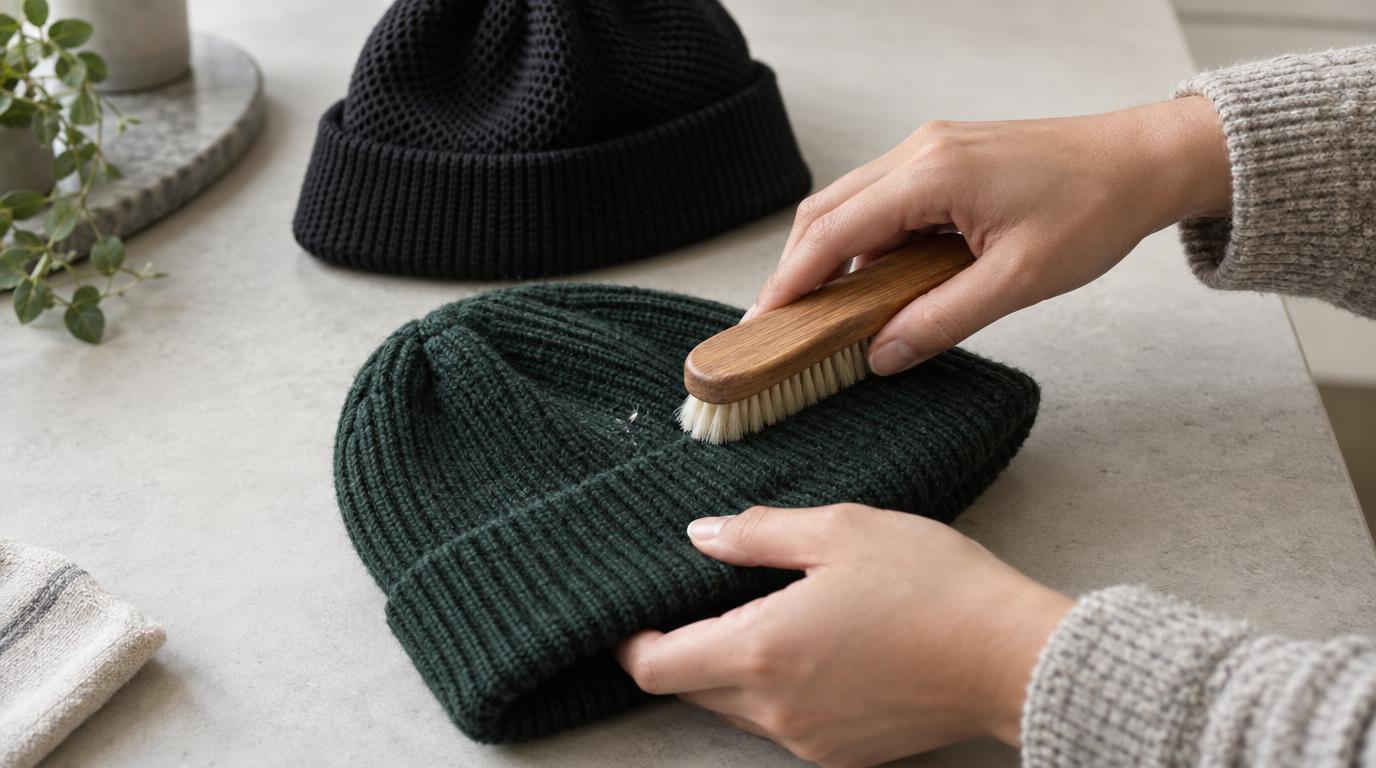
A fedora may be fur felt, wool felt, straw or fabric. A Western hat may be felt, straw or palm. A bucket hat may be washable cotton or a coated technical textile. The type identifies the form; the material, stiffener, sweatband, lining, trim and finish determine what the hat can tolerate.
Before a deadline, document stains, perspiration, makeup, odor, loose trim, fit and shape. Keep the hat supported in a rigid box and avoid last-minute heat, soaking or pressure. Cleaning, repair and reblocking can be separate jobs, and the ready time should be confirmed only after inspection.
Questions About Identifying Hats
How can I tell a flat cap from a newsboy cap?
A flat cap has a low streamlined body that meets a small front peak. A newsboy cap is fuller, usually built from multiple panels and commonly finished with a button at the top.
Does the word Panama describe the shape?
No. Panama refers to the traditional Ecuadorian toquilla-straw hat. The finished hat may be blocked into a fedora-like or other brimmed silhouette.
What information should I give a cleaner about a hat?
Provide the care label, material, brand, stain source, previous treatment, shape problem, trim details and deadline. Photos of the intended shape are especially useful when cleaning and reblocking are both being considered.
Continue the Hat Care Series
After the style is identified, evaluate the hat’s material and condition. The Burbank cleaning and reblocking guide explains how felt, straw and fabric hats differ and why a deadline should include time for drying, repair and final shape checks.
Call Alameda Dry Cleaners at (818) 557-0276 before bringing in a structured hat with a deadline.